Tri-ply stainless marketing sells even heating as the decisive upgrade. Most home cooks never cook at the volume where the extra layers actually change the result.
We pulled three catalog pieces that skip the ply tax entirely. One deep tri-ply frying pan, one heavy-base stockpot, and one straightforward tri-ply stockpot all handle searing, simmering, and one-pot meals without the premium layer count. The real variables are gauge, lid fit, and handle security under load.
What the extra layers actually buy
Tri-ply construction sandwiches aluminum between two sheets of stainless. The aluminum conducts heat laterally so the sides heat more evenly than a single-wall pan. On paper this prevents hot spots during delicate sauce reduction or long braises.
In practice the difference shows up mainly in commercial kitchens where pans sit on high-output burners for eight hours straight. Home cooks turn the burner off between steps and work in smaller batches. The extra conduction layer adds cost and weight without changing the outcome on a Tuesday night chili or a Sunday pot roast.
The three picks below prioritize weight distribution and lid performance instead. They deliver the even results most recipes actually need.
The deep-sided tri-ply pan that contains the mess
The CAROTE 10-inch tri-ply deep frying pan uses fully bonded three-ply construction from base to rim. The high sidewalls keep splatter contained when you deglaze for pan sauces or stir-fry larger batches. The stay-cool handle design reduces the burn risk that comes with long handles on shallower skillets.
Reviewers consistently note that the pan sears well and cleans up without sticking when preheated properly. The oven-safe rating up to 600°F lets you finish a seared steak or braised short ribs in the same vessel. Because the walls are clad, the sides participate in the cooking rather than staying cooler than the base.
This is the piece for cooks who want one pan that handles both high-heat searing and gentle simmering without needing a second vessel for sauce building. It trades some of the raw thermal mass of a heavier stockpot for versatility on the stovetop.
The heavy stockpot that brings water to a boil fast
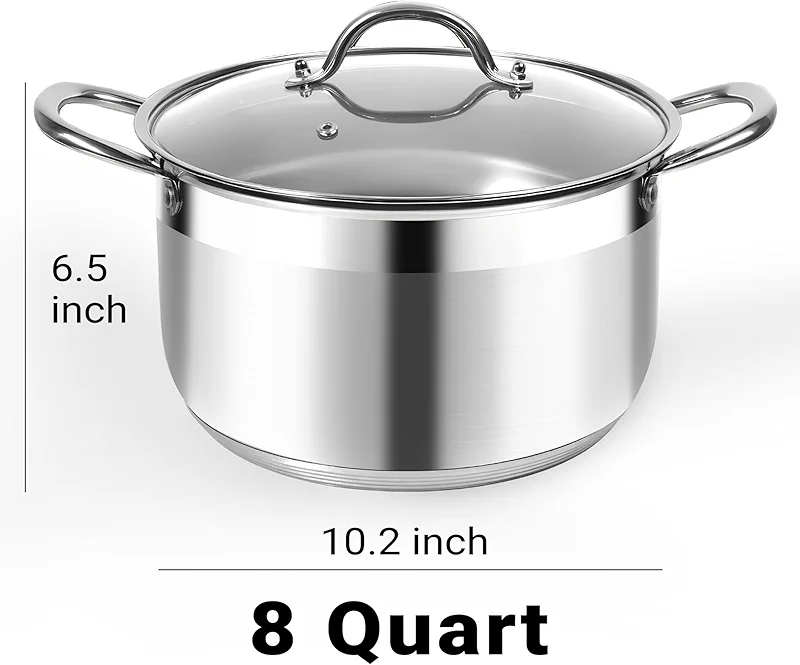
Kirecoo Stainless Steel Stock Pot - 8 Quart Heavy Duty Induction Cooking
$28.99on Amazon
The Kirecoo 8-quart stockpot uses a five-layer thickened base rather than full tri-ply cladding. The extra bottom mass heats water and stocks quickly while the tall straight sides reduce evaporation during long simmers. The riveted handles stay secure even when the pot is full and the glass lid with vent lets you monitor without lifting.
Long-term owners report that the pot distributes heat evenly enough for pasta water or soup bases and holds temperature well once up to heat. The size is large enough for family batches or batch cooking without boiling over. The non-reactive stainless interior means tomato-based sauces and acidic reductions do not pick up metallic taste.
This is the workhorse for anyone who regularly makes stock, boils pasta for a crowd, or braises large cuts. The thickened base gives it the thermal stability that marketing usually attributes to full tri-ply, at a lower price point and with more capacity.
The straightforward tri-ply stockpot that covers daily use
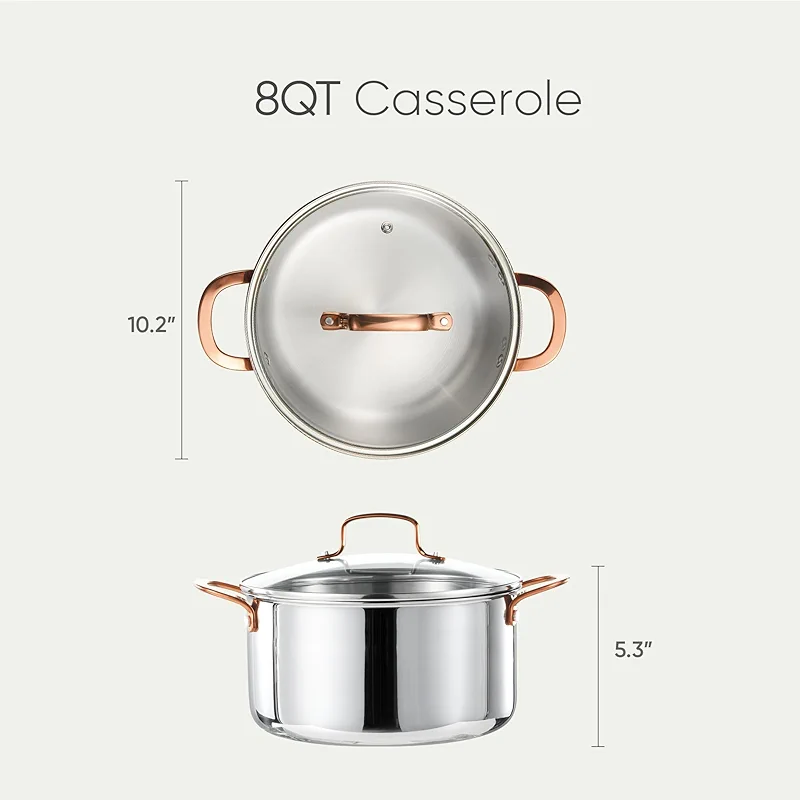
The CAROTE 8-quart tri-ply stockpot brings full three-ply cladding to a classic stockpot shape. The brushed finish hides fingerprints better than polished stainless and the loop handles make lifting a full pot safer than single side handles. The glass lid and flared rim help with controlled pouring and moisture retention during covered simmers.
Users highlight that it comes to temperature quickly and maintains steady heat for sauces and soups. The oven-safe construction supports finishing dishes in the oven when stovetop space is tight. Because the cladding runs up the sides, the entire interior surface participates in heat transfer rather than relying solely on the base.
This piece slots into the rotation for cooks who want one stainless vessel that can handle both stovetop reduction and oven braising without switching pans mid-recipe. It is the middle ground between the deep frying pan's maneuverability and the heavier Kirecoo capacity.
The pattern across stainless choices
These three share a refusal to pay for ply count as the primary selling point. The CAROTE pieces use tri-ply where it adds measurable side-wall participation. The Kirecoo uses a thickened base where raw thermal mass matters most. All three keep the focus on gauge, lid performance, and handle security rather than marketing the layer count itself.
The default assumption that more layers always equals better even heating does not hold at home-cook scale. The extra conduction only matters when you are pushing the pan hard enough and long enough for lateral heat flow to become the limiting factor. Most Tuesday dinners never reach that threshold.
If you only buy one
Start with the Kirecoo 8-quart stockpot. It gives the largest capacity and the strongest thermal mass for the lowest relative cost. Add the CAROTE deep frying pan when you want searing and sauce work in a single vessel. The second CAROTE stockpot fills the gap for smaller daily batches or when you need oven-to-table service.
The tri-ply tax is real. These three skip it and still deliver the results the recipes actually require.