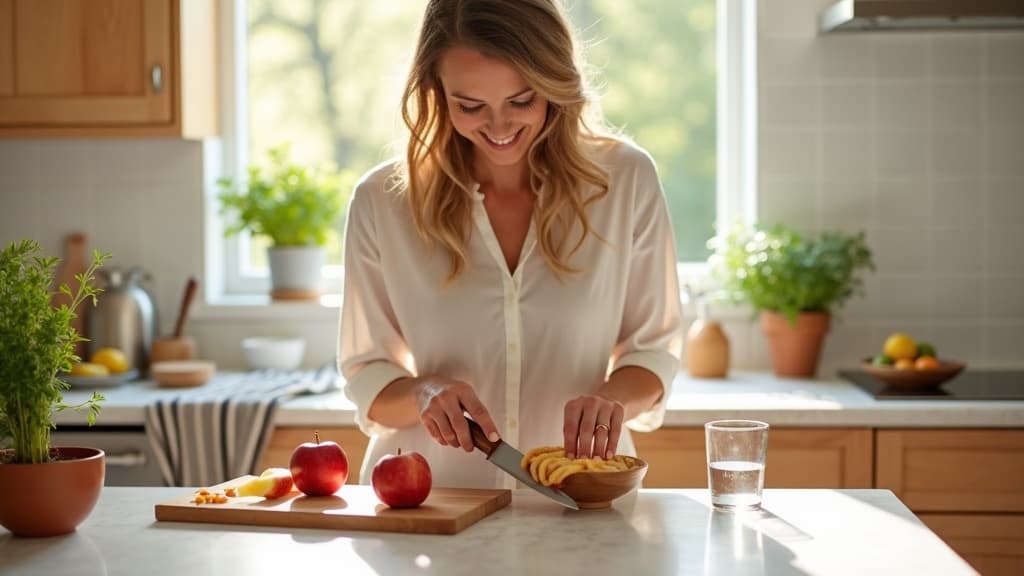
A chef's knife slices through onions and crushes garlic with ease, dominating knife blocks and roundups alike. But when mincing fresh herbs, peeling small fruits, or trimming thin fish fillets, that extra length turns precise work into a struggle with awkward angles and overreach. We're reaching for shorter utilities every time we prep. These compact blades bring control where the big one falters, making everyday prep faster and cleaner.
What the 8-inch chef's blade actually buys
Knife guides crown the chef's knife as the one-tool kitchen essential, and they have a point for broad tasks like rough chops or large vegetables where belly curve and length shine. Shorter utilities trade some of that reach for maneuverability on detail work the home cook hits daily.
The premium versions add forged construction for edge retention under restaurant volume, heritage branding from Solingen workshops, and balanced heft that impresses in the hand. Those qualities hold real value for pros turning over hundreds of covers or collectors building a block. At home scale with weekly use, blade geometry drives performance more than steel pedigree, and shorter profiles win on tasks under six inches.
The gap shows up clearest when the chef's knife binds on small piles or glances off delicate skins. Utilities designed for that range separate cleanly without the force.
The imarku santoku with hollow-edge anti-stick
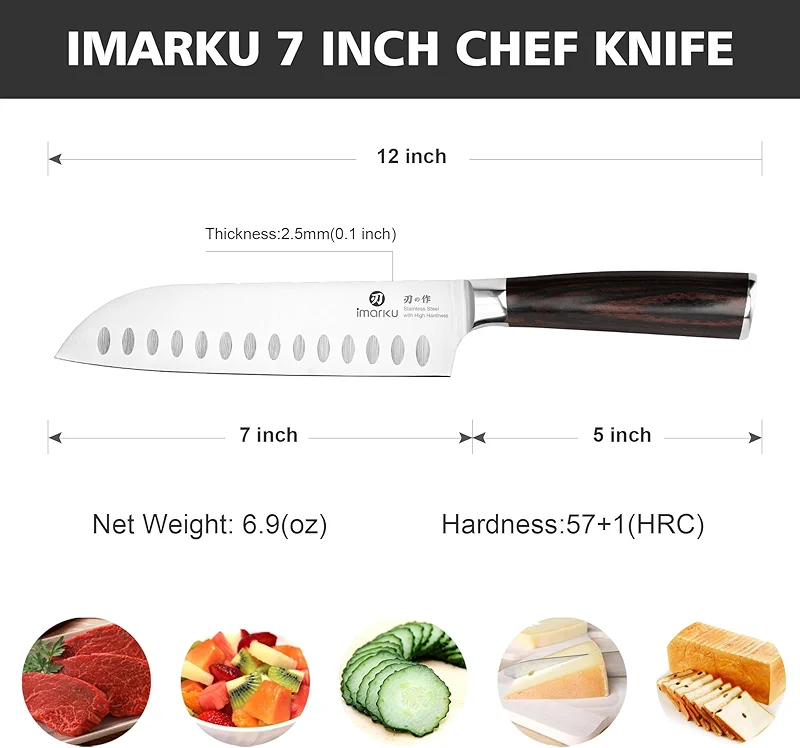
imarku Chef Knife 7 Inch Kitchen Knife Ultra Sharp Santoku Knife - High
$39.99on Amazon
High-carbon stainless steel forms the core of this 7-inch santoku, polished to a 15-18 degree edge that holds through vegetables, fruits, and proteins. Hollow scallops along the blade create air pockets to prevent slices from clinging during high-volume mincing or dicing. Pakkawood handle resists moisture expansion while delivering a textured grip that stays secure in wet hands.
Long-term users call it their go-to for nightly prep, praising the solid weight and comfort that avoids wrist strain over extended sessions. The full tang extends balance from bolster to end, supporting rock chops on garlic or push cuts on basil without tipping.
Hand washing preserves the edge longer than dishwasher cycles, and the wood-like stability beats traditional handles prone to cracking. Skip it if your counter demands only massive mirepoix batches where 8-inch leverage rules. For the herbs, shallots, and fillets filling most meals, this utility pulls ahead.
The Wüsthof santoku forged for edge life
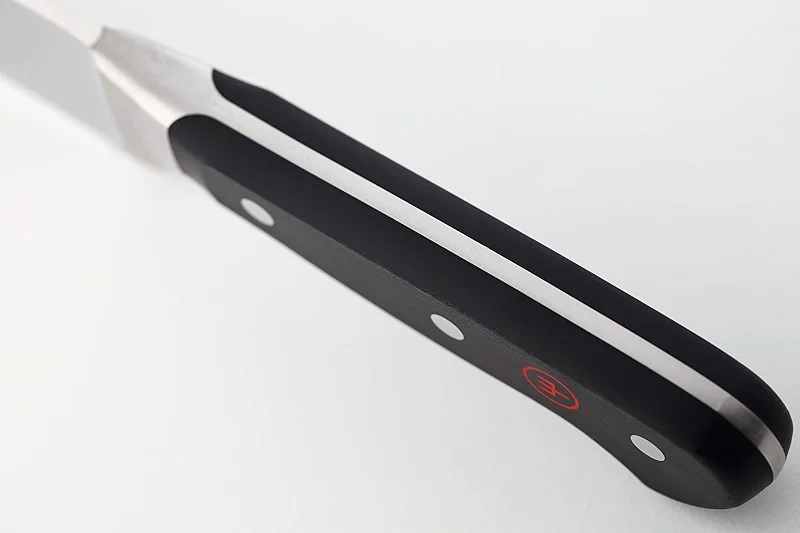
Precision-forged from high-carbon stainless and tempered to high hardness, the 7-inch Classic santoku starts sharper with better retention than many stamped rivals. Full bolster and finger guard protect knuckles during close work, while triple-riveted synthetic handle locks in comfort for prolonged use without loosening.
Owners highlight the out-of-box sharpness and even balance that makes precision slicing feel effortless on everything from carrots to citrus. The PEtec edge technology sharpens cleanly on standard stones, extending time between hones compared to softer steels.
Cool-grip materials suit steamy kitchens, and the design echoes Solingen tradition without unnecessary weight for home counters. The caveat lands in heavy cleaving where length aids momentum, but for controlled tasks like shallot dice or herb piles, the shorter form outperforms. Keep it hand washed to match the care pro environments demand.
The Tojiro petty for ultimate small-task control
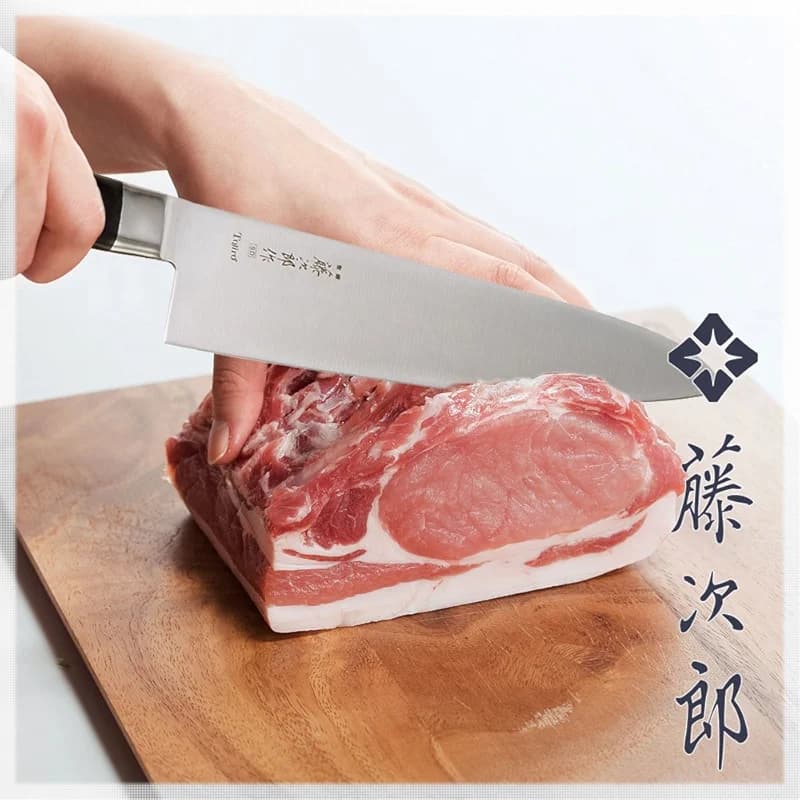
Cobalt-alloy vanadium steel core clad in stainless delivers corrosion resistance with keen edge retention in this compact petty knife. Reinforced laminated wood handle provides a stable, lightweight hold suited to peeling, paring, and detail trimming without fatigue. Japanese construction emphasizes thin geometry behind the edge for foods that demand finesse over force.
The 6-inch blade navigates tight spaces like garlic cloves or fruit garnishes where wider utilities bind. Plain edge takes honing well, maintaining separation on sinewy bits or thin skins that serrations tear.
Durability suits repeated use without chipping, though the wood requires drying to avoid swelling. Reach for it on intricate work the santoku oversizes, but pair with longer blades for board space hogs like full carrots. Ratings confirm reliability in precision roles where chef's knives sacrifice control.
The geometry pattern all big blades share
These three utilities expose a core tradeoff in the chef's knife design. Length aids power on volume but sacrifices agility on portions under fist-sized. Broad bellies excel at scooping but snag on curls of ginger or parsley stems. The result forces compromises like sawing motion or blade twisting that shorter, narrower profiles avoid entirely.
Stamped and forged options alike prove the point: geometry trumps pedigree for home tasks clustered around small ingredients. Thousands of reviews land on balance and control as the differentiator, not origin story.
Start with the imarku
Grab the imarku santoku first because its hollow edge and pakkawood grip cover herbs through proteins without gaps. Add the Tojiro petty for peels and garnishes, the Wüsthof for sessions demanding pro retention. Together they fill the precision void the chef's blade leaves open.